


Bike rental safety is defined as the practice of verifying equipment condition, rider knowledge, and route awareness before every ride. For travelers exploring unfamiliar destinations on rented bikes, this practice is the difference between a breathtaking adventure and a preventable accident. 99% of short-term rental trips are incident-free, yet the remaining 1% carries serious consequences. In 2025, New South Wales recorded 250 injuries and 5 deaths linked to rental-style e-bike use. That number proves that understanding why safety matters in bike rentals is not overcaution. It is the foundation of every good ride.
The most dangerous moment of any rental ride is the first one. You are on an unfamiliar bike, on unfamiliar roads, with no sense of how the brakes feel or whether the tires hold pressure. Rental bikes change hands constantly, and each rider leaves behind a little more wear. The ABC pre-ride method takes 2–5 minutes and prevents the most common roadside failures.
Here is how to apply it before accepting any rental bike:
Pro Tip: Photograph every scratch, dent, and worn component before you leave the rental shop. Liability for damage shifts to the renter after departure, and photo evidence is your best protection against unfair damage claims.
After the static check, take a short test ride near the rental point. Subtle issues like seatpost slippage or brake grabbing only appear once the bike is moving and components warm up. Two minutes of slow riding near the shop can reveal problems that a visual inspection misses entirely.

A rental bike is not a personal bike. It does not get rested between rides. A rental mountain bike typically completes 15–25 outings in a single high season. That volume accelerates wear on every safety-critical component. Brake pads thin out. Chains stretch. Spokes loosen. Tires lose tread faster than any single owner’s bike would.
The components that fail most often on rental bikes are also the ones that cause the most serious accidents:
“Broken spokes and worn-out tires are non-negotiable rejection criteria. A buckled wheel on a descent is not a mechanical inconvenience. It is a crash waiting to happen.” — Mechanic Amy Webb, cited in Guardian safety testing
The consequences of ignoring bike condition go beyond physical injury. A mechanical failure mid-ride in an unfamiliar city means a ruined day, a potential hospital visit, and a dispute with the rental shop over who is responsible. Travelers who check essential bike maintenance standards before renting protect both their safety and their trip. The same logic applies to jet ski rental check-ins, where equipment inspection before departure is the industry standard for all hospitality rentals.
Equipment condition alone does not guarantee a safe ride. Rider knowledge fills the gap between a well-maintained bike and a confident, controlled experience. This is especially true with e-bikes, which behave differently from standard bicycles in ways that surprise first-time riders.
Understanding an e-bike’s power assist and heavier frame weight leads to measurably more confident handling and fewer accidents. A good rental operator delivers a safety walkthrough before every ride, not just a key handover. That walkthrough should cover:
Route knowledge matters just as much as bike knowledge. Cycling maps that show infrastructure stress levels and surface types guide riders toward safer paths, not just shorter ones. Most cycling injuries occur where bike infrastructure ends abruptly, dropping riders into fast-moving traffic without warning. A map that highlights these transitions is a genuine safety tool, not a tourist accessory.
Pro Tip: Always wear the helmet provided and check that the lights and reflectors work before leaving. Visibility is a safety precaution for bike rentals that costs nothing and prevents a great deal.
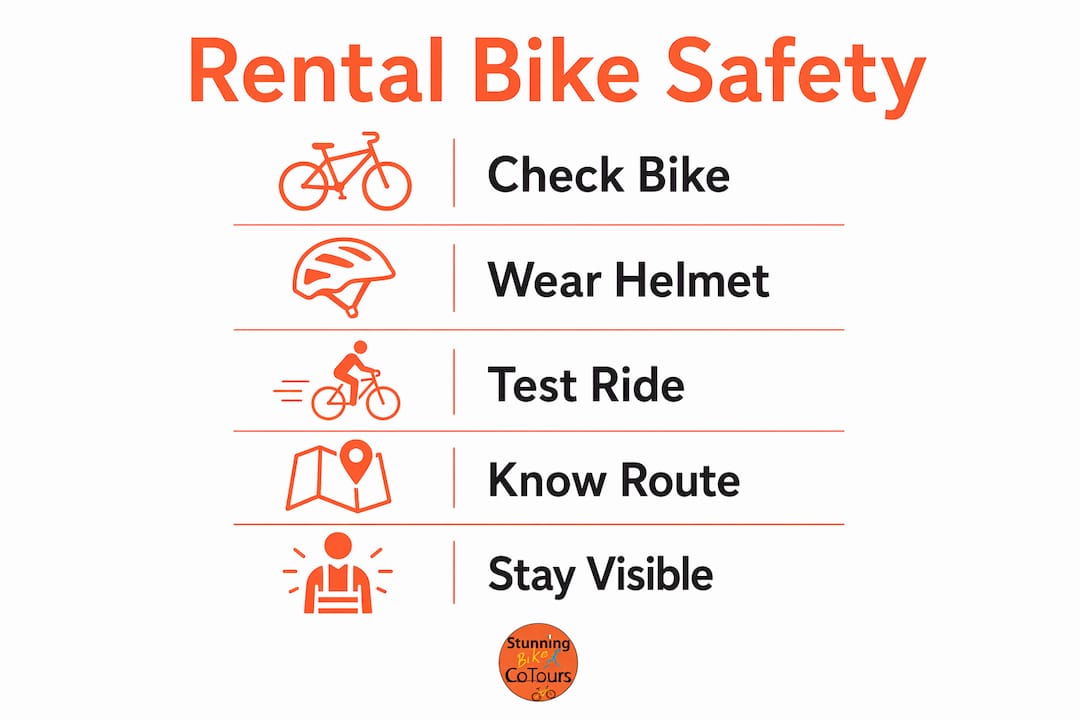
Riders who start slow, test brakes on the first gentle downhill, and stay aware of surroundings for the first five minutes build the muscle memory needed for the rest of the ride. Confidence built on knowledge is far more reliable than confidence built on assumption.
The responsibility for bike rental safety does not rest entirely with the traveler. Rental operators set the baseline. A shop that skips post-rental inspections, ignores worn brake pads, or fails to brief riders on e-bike handling is creating risk for every customer who walks out the door.
Strong rental operations follow a clear set of practices:
Stunning Bike Co-Tours applies all of these practices at its Lake Como location. Every bike is inspected and serviced before it leaves the shop. Staff provide a full safety briefing covering e-bike controls, local road conditions, and recommended routes. The shop’s top-rated bike rentals reflect a commitment to equipment reliability that goes well beyond the minimum.
One practical note for travelers in Como: Stunning Bike Co-Tours is located inside a hall of shops, set slightly back from the street, with a large illuminated LED store window that makes it easy to spot once you are in the right area. Some visitors confuse the area with nearby motorbike rental operations. Stunning Bike Co-Tours rents bicycles and e-bikes exclusively, with a focus on guided cycling tours and traveler safety. That distinction matters when you are choosing where to rent.
Safe bike rentals require equipment checks, rider education, and operator accountability working together at every stage of the rental process.
| Point | Dettagli |
|---|---|
| ABC method saves rides | Checking Air, Brakes, and Chain before departure prevents the most common mechanical failures. |
| High-season wear is real | Rental bikes complete 15–25 outings per season, making brake, tire, and chain checks non-negotiable. |
| Photo documentation protects you | Photographing the bike before and after the ride prevents unfair damage claims at return. |
| E-bike knowledge reduces accidents | A safety walkthrough on power assist and braking differences leads to more confident, safer riding. |
| Route maps are safety tools | Cycling maps showing infrastructure stress levels help riders avoid high-risk road transitions. |
By Andrea
After years of watching travelers pick up rental bikes and ride away without a single check, I have come to one clear conclusion: most people treat a rental bike like a shopping cart. They assume it works because it was handed to them. That assumption is the root cause of most rental-related incidents I have seen.
The insight that changed how I think about this is simple. A rental bike is not maintained for you. It is maintained for the last person who complained. If no one complained, the worn brake pad stays worn. The loose spoke stays loose. The tire stays at whatever pressure it drifted to overnight.
What I have also noticed is that riders who spend five minutes on a pre-ride check ride with a completely different energy. They are not tense or reactive. They know their equipment. That confidence shows up in how they handle corners, how they respond to traffic, and how much they actually enjoy the ride. Safety knowledge does not make a ride less fun. It makes it more fun, because you stop worrying and start looking at the view.
My advice is direct: advocate for your own safety before you leave the shop. Ask for the ABC walkthrough. Ask about the route map. Ask when the bike was last serviced. A good rental operator will answer every question without hesitation. If they cannot, that tells you everything you need to know about their maintenance standards.
— Andrea
Stunning Bike Co-Tours inspects every bike before it leaves the shop, delivers a full safety briefing at checkout, and provides cycling maps designed for Lake Como’s roads and lakeside paths. The fleet includes premium e-bikes and standard bikes, all maintained to the standards described in this article. Over 4,000 travelers have explored Como’s legendary shores with Stunning Bike Co-Tours, and the five-star TripAdvisor reviews reflect what happens when safety and quality come first. Whether you want to rent a bike or join a guided tour, the team is ready to make your ride as breathtaking as the landscape itself. Book directly and save €10 on guided tours when you reserve through the website.
The ABC method covers Air (tire pressure), Brakes (lever pull and pad condition), and Chain (smooth shifting and no rust). This pre-ride check takes 2–5 minutes and prevents the most common mechanical failures on rental bikes.
Rental bikes complete 15–25 outings per high season, accelerating wear on brakes, tires, and chains far faster than a personal bike. High-frequency use means safety-critical components can degrade between rentals without the rider knowing.
Yes. Photographing the bike’s condition before departure protects you if the shop claims damage on return. Liability shifts to the renter once the bike leaves the rental location, making photo evidence the most reliable form of protection.
E-bikes are not inherently more dangerous, but they require a brief orientation. Understanding power assist and heavier weight before riding leads to more confident handling and fewer accidents, especially for first-time e-bike riders.
Cycling maps that show infrastructure stress levels and surface types guide riders toward safer routes. Most cycling injuries occur where bike infrastructure ends abruptly, and a good map helps riders anticipate and avoid those transitions.