


Yes, e-bike tours make multi-day cycling genuinely accessible for most active seniors, flattening hills and stretching daily range far past what a standard bike allows. Choose a guided tour when you want a leader, a support vehicle, and built-in social pacing; choose self-guided when you want independence and trust your own navigation. Operators like Stunning Bike Co-Tours, backed by strong TripAdvisor reviews, show what senior-friendly execution actually looks like.
TL;DR:
- E-bike tours for seniors typically feature shorter daily distances, support vehicles, and adjustable pacing to accommodate varying energy levels.
- Choosing between guided, self-guided, or hybrid formats depends on the rider’s desire for structure, independence, and flexibility with logistics.
- Important senior-friendly features include route flexibility, on-route support, equipment fit, and accessible lodging; asking for specific mileage and elevation data is advised.
- Terrain type greatly influences difficulty, with flat coastal routes and gentle countryside loops generally being the easiest and most scenic options for older riders.
- Preparing for a tour should involve bike testing, medical consultation, packing accessible supplies, and confirming support vehicle responsiveness and medical procedures.
Senior e-bike tours are guided or self-guided cycling trips built around electric-assist bikes, paced and supported specifically for riders in their 60s, 70s, and beyond. The “senior” label isn’t about age gates. It’s about design choices: shorter daily distances, support vehicles, and equipment that removes the physical barriers that keep older riders off standard road bikes.
The three formats differ mainly in how much logistics you want to hand off versus control yourself.
Pick guided if you want structure and companionship. Pick self-guided if flexibility matters more than hand-holding.
Marketing language calls almost everything “senior-friendly.” Here’s what to check before you believe it.
Pro Tip: Ask an operator for the actual daily mileage and elevation numbers, not just a description like “easy” or “moderate.” Numbers don’t lie the way marketing copy does.
Start with what kind of trip you actually want. A social, cultural trip calls for a different tour than a fitness-focused push through hill country, and matching that intent first saves you from booking the wrong style entirely.
Once you know the vibe, ask the operator these questions directly:
Then read the price line item by item. Inclusions like luggage transfer, meals, and accommodation should be spelled out, not implied. E-bike upgrades, if not standard, should carry a clear extra cost stated up front, not surfaced at checkout.
Terrain shapes the experience more than distance does. A flat 25 miles feels nothing like a hilly 15.
Well-run operators grade these routes with actual numbers. A gentle multi-day itinerary might run around 25 miles (40 km) per day, with the option to shorten a stage or use support vehicles if needed. Guides and route pages that list specific U.S. examples, like coastal rides on Martha’s Vineyard or the Santa Barbara to Ojai corridor, give you a useful benchmark for what “easy” should actually mean in practice.
Preparation matters more at 65 than it did at 35, and a little planning heads off most problems before they start.
Comfort with the equipment beats general fitness as a predictor of how much you’ll enjoy the trip. A rider who’s practiced with pedal-assist settings usually has a better week than a stronger rider who’s never touched an e-bike controller before.
This guide draws on operator practices across senior-focused cycling programs and firsthand knowledge of what actually makes a difference on the road, compiled by Andrea, whose background covers guided cycling tourism and e-bike logistics in Lake Como.
Stunning Bike Co-Tours backs that experience with real numbers: over 4,000 customers served and a strong run of five-star TripAdvisor reviews. Its multilingual audio helmets deliver guided commentary in up to 19 languages, and its e-bike versus regular bike guide helps riders pick the right equipment for their fitness level and route ambitions.
These aren’t vanity numbers. A large customer base means the operator has already handled the awkward questions, the mid-ride injuries, and the “my battery died” moments that senior riders worry about most.
Standard bikes punish hills and headwinds equally. E-bikes remove that penalty almost entirely. Pedal-assist motors flatten the grades that would otherwise force a rider off the saddle and walking, which is exactly the failure point that keeps many seniors away from cycling in the first place.
The accessibility gain isn’t marginal. Riders aged 60 to 90 and older can now complete routes that would have been out of reach on a traditional bike, and many operators specifically offer e-bikes as a standard option rather than a costly upgrade, which removes the stigma that used to come with asking for assistance.
There’s a comfort dimension too. E-bikes typically use more upright geometry and step-through frames, easing pressure on knees, hips, and lower backs. That matters over a multi-day trip where cumulative fatigue, not single-day exertion, is what wears riders down.
Socially, e-bikes level the playing field within a group. A stronger rider and a less-conditioned one can ride the same route at the same pace, using assist levels to close the fitness gap rather than one person waiting at every hill crest. That single feature does more to keep mixed-ability groups together, and happy, than almost anything else in the tour design.
The net effect: e-bikes turn “I used to cycle” into “I still cycle,” which is precisely the promise senior-focused tours are built to deliver.
A senior-friendly fleet isn’t one-size-fits-all. Saddle height, handlebar reach, and frame step-through height should all be adjustable at the point of rental, not something you negotiate after you’re already sore.

Pedal-assist levels matter just as much as frame fit. Most e-bikes offer a range of assist modes, from a light boost that barely registers to a strong push that does most of the work on steep grades. Riders managing joint pain or recovering from surgery often lean on the highest assist setting for climbs, then dial back on flats to get real exercise without overexertion.
Battery range and swap policy deserve a direct question, too. A tour that plans for battery swaps or charging stops midday gives you far more flexibility than one assuming a single charge covers the whole route. Saddle style is worth asking about specifically: wider, gel-cushioned saddles reduce discomfort dramatically on multi-hour rides, and a good operator will have alternatives on hand rather than a single fixed option.

None of this is exotic engineering. It’s just attentiveness, and it separates operators who actually serve senior riders from those who slapped “senior-friendly” on a page without changing anything about the fleet.
Temperature and daylight both shape how enjoyable a tour feels, and seniors tend to feel weather extremes more acutely than younger riders.
Spring (April through June) and early fall (September into October) hit the sweet spot in most temperate regions: mild temperatures, manageable daylight hours, and lower humidity than peak summer. These shoulder seasons also mean thinner crowds at popular stops, which matters when a rest break should feel relaxing, not rushed.
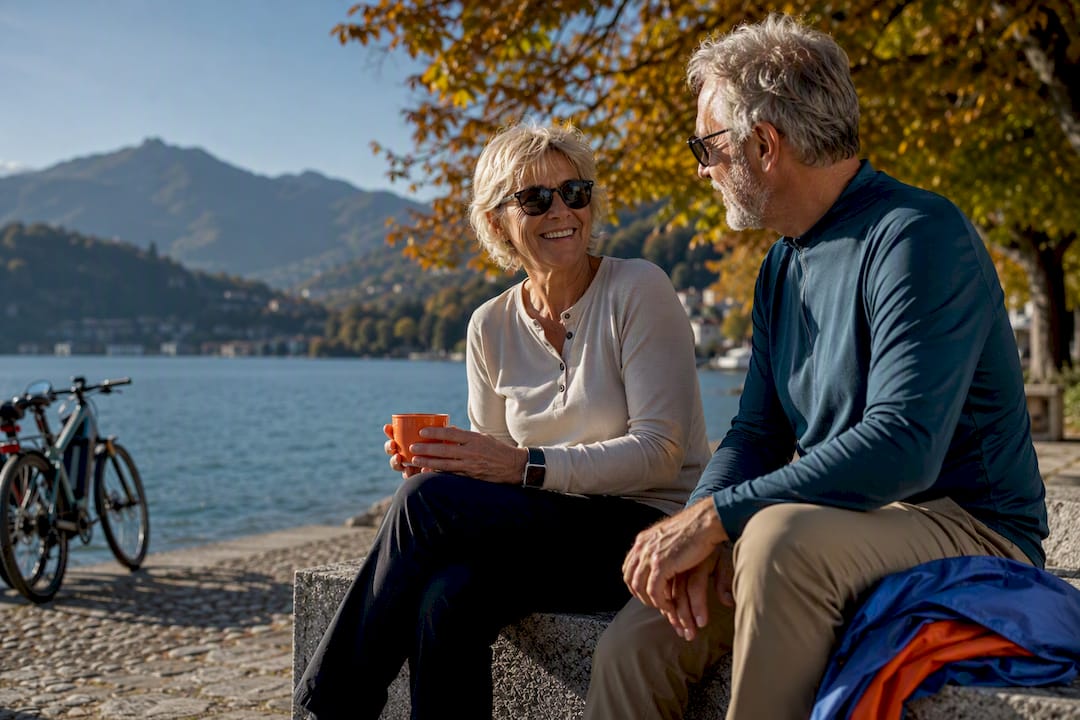
Midsummer can work, but heat becomes a real factor on exposed routes with little shade. If summer is the only option, look for tours that start early and finish by early afternoon, avoiding the hottest stretch of the day. Winter tours exist in mild-climate regions, but shorter daylight hours compress your riding window and require more careful planning around sunset.
Whatever season you pick, ask about typical weather for that specific month in that specific region rather than assuming general seasonal rules apply everywhere equally.
The pattern across reviews and testimonials from older riders is consistent: comfort and social connection matter more than raw distance covered.
Riders repeatedly cite three things as the difference between a trip they’d repeat and one they wouldn’t: a pace that didn’t leave anyone stranded, a support vehicle that actually showed up when needed, and guides who adjusted plans on the fly rather than sticking rigidly to a script. Tours built specifically for older travelers often layer in companion programs and recovery-focused touches, and operators offering dedicated senior packages increasingly build these expectations into the itinerary from day one rather than treating them as special requests.
The recurring theme in five-star reviews isn’t athletic achievement. It’s relief. Riders describe finally seeing places they’d assumed were off-limits once knees or lungs stopped cooperating with a standard bike, and that relief shows up again and again in how they talk about the trip afterward.
What surprises people most isn’t the assist motor. It’s how quickly a mixed-ability group settles into the same rhythm once the hills stop sorting people by fitness level… The best advice is simple: pick the tour that matches your actual energy on an average day, not your best day, and let the pacing options do their job.
— Andrea
Stunning Bike Co-Tours built its Lake Como program around exactly the features this guide just walked through: standard e-bike availability, multilingual audio helmets, luggage storage near Como Lago Train Station, and both guided and self-guided formats depending on how much independence you want.
Booking a senior-specific accommodation is straightforward. When you reserve, simply note your preferred saddle type, request a step-through frame if helpful, or ask for a lower daily mileage plan. The team adjusts bike fit and pacing before you ever arrive at the shop. One quick note for anyone booking in Como itself: Stunning Bike Co-Tours operates from inside a shop hall, tucked slightly back from the street, though the storefront is easy to spot thanks to a large window lit up with an LED bike display. That’s different from a nearby motorbike rental operation some visitors mix up with us; if you’re looking for e-bikes and guided cycling tours specifically, make sure you’ve found the right storefront.
Ready to lock in dates or ask about senior-specific bike fit? Browse tour and rental options or head straight to book your e-bike rental for your Como trip.
For broader route inspiration, Epic Road Rides’ guide to senior bike tours and Sixty and Me’s list of e-bike trails are solid starting points. If you’re planning transfers or need help coordinating a companion’s travel, private senior transportation guidance covers that logistics gap well. For Como specifics, see our e-bike versus regular bike comparison.
Step-through frames with a mid-drive motor and a range of pedal-assist settings work best, since they lower the barrier to mounting and let riders dial in exactly how much help they need on climbs.
Coastal, low-traffic routes like Martha’s Vineyard and the Santa Barbara to Ojai corridor are frequently recommended for their gentle terrain and scenic value, and Lake Como’s guided e-bike routes offer a comparable flat, sightseeing-focused pace for U.S. travelers heading abroad.
Medicare does not cover e-bikes; they’re classified as recreational or transportation equipment rather than durable medical equipment, so any e-bike purchase or rental is an out-of-pocket cost.
Many seniors ride e-bikes successfully, particularly on graded, low-elevation routes with support vehicles present, but a quick check-in with a doctor is worth it if there’s a heart condition or balance concern.
Guided tours provide a leader, group pacing, and a support vehicle throughout, while self-guided tours offer independence with route notes and luggage transfers, requiring more confidence in navigation and planning.