

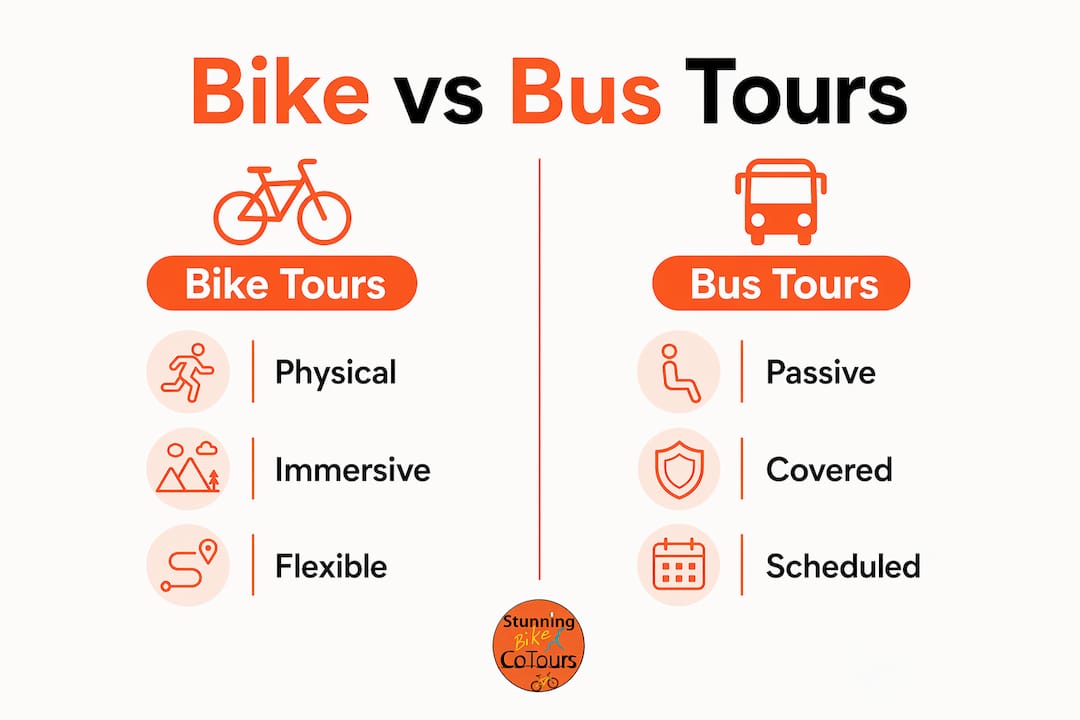
Bike tours are the most immersive way to explore a destination, placing you directly inside the landscape rather than behind glass. While bus tours move you from point A to point B in climate-controlled comfort, cycling tours put every sense to work: the smell of a local market, the sound of cobblestones under your tires, the warmth of afternoon sun on your arms. Europe accounts for nearly 40% of the global cycling tourism market, with projected growth exceeding 13% annually through 2033. That number reflects a clear shift in how travelers want to experience the world. Active exploration, not passive observation, is the new standard.
The core difference between cycling tours and bus tours is physical engagement. On a bus, you watch the world scroll past like a screen. On a bike, you are part of the scene. Removing the barrier of bus windows allows riders to experience a destination through all five senses, not just sight. That is the “handlebar height” perspective that experienced operators describe: unmediated contact with the environment around you.
The practical result is a richer cultural encounter. You stop at a bakery because the smell pulls you in. You hear a street musician clearly enough to recognize the song. You feel the gradient change as the road climbs toward a hilltop village. None of that reaches you through a bus window.
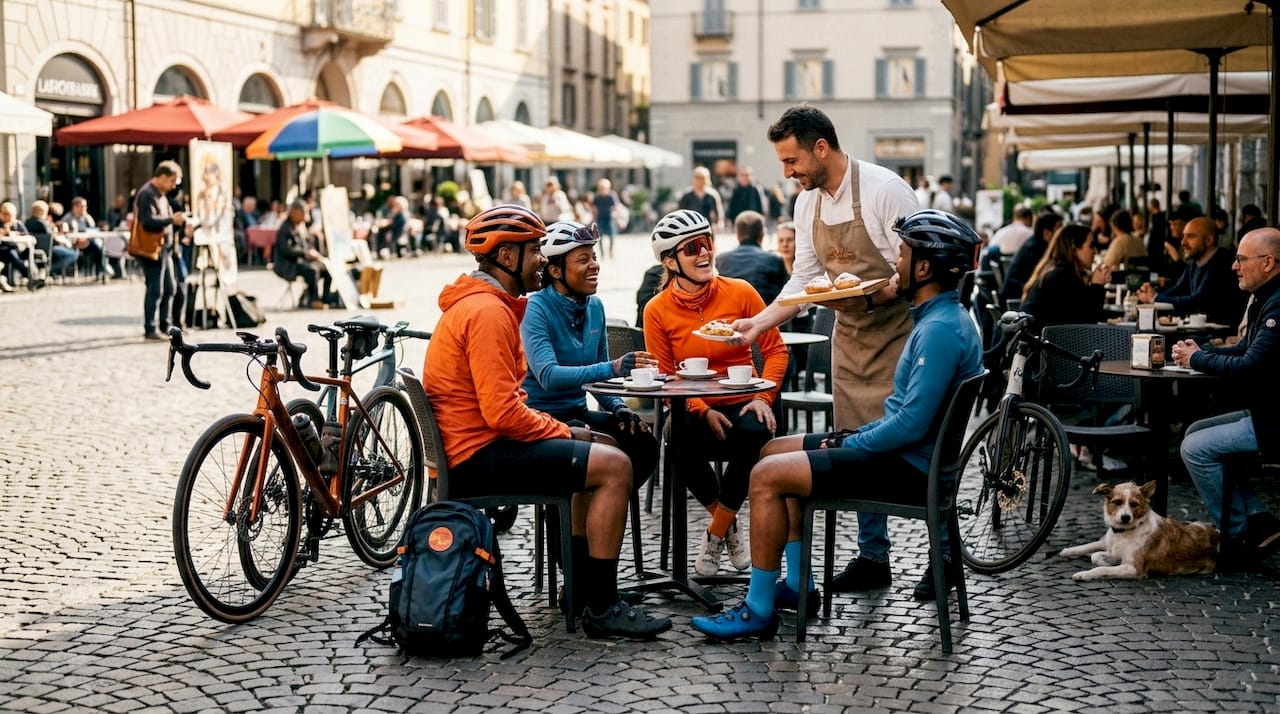
City-based cycling tours amplify this effect through pacing. Stops every 15–20 minutes keep energy high and engagement sharp, contrasting sharply with the long passive stretches of a bus itinerary. Each stop is a genuine encounter, not a scheduled photo opportunity.
The advantages of cycling tours over bus travel include:
Pro Tip: When booking a guided bike tour, ask whether the route includes at least one stop that is not on the standard tourist map. The best operators always have one.
Bike tours deliver health benefits that no bus tour can replicate. Sustained aerobic cycling strengthens the cardiovascular system, builds leg and core muscle, and burns calories at a rate that makes sightseeing feel like a workout. The physical return alone justifies choosing a cycling vacation over a passive one.
The mental benefits go deeper than most travelers expect. Multi-day bike tours stimulate production of BDNF, or brain-derived neurotrophic factor, a protein that supports neuron growth and brain resilience. Short gym sessions do not produce the same sustained BDNF response that hours of outdoor cycling generate. The effect is measurable: clearer thinking, improved mood, and reduced anxiety that persists after the tour ends.
“Multi-day bike tours combine physical exertion, outdoor exposure, and social connection, producing layered mental health benefits that bus tours simply cannot offer. The cumulative effect of days in motion, fresh air, and shared effort creates a psychological reset that travelers describe as genuinely life-changing.”
Psychological resilience also grows from the structure of a multi-day tour. Completing a challenging day on the bike, arriving at a new town under your own power, and waking up ready to do it again builds a quiet confidence that transfers back to everyday life. Bus tours offer no equivalent.
The key health advantages of cycling tours include:
E-bikes have made these benefits accessible to travelers of all fitness levels. Mixed-ability groups can ride together comfortably, with electric assist closing the gap between experienced cyclists and beginners. The health return is real regardless of which bike you choose.
Cycling occupies a uniquely productive middle ground between walking and bus travel. Walking covers too little ground to reach the variety of sites that make a destination memorable. A bus covers too much ground too fast to let any single place sink in. Cycling at roughly 15 km/h with frequent stops hits the ideal balance: enough distance to feel like genuine exploration, slow enough to absorb what you pass.
A 7-day bike tour typically covers 250–400 km under the rider’s own power. That range spans multiple towns, landscapes, and cultural zones in a way that a bus tour itinerary rarely matches for depth. The difference is not just distance. It is the quality of attention paid to each kilometer.
Optimal city bike tours cover 10–15 km in 2.5 to 3 hours, with frequent stops for stories and photos. That format maximizes enjoyment and minimizes fatigue, producing a richer experience than a 3-hour bus loop of the same city.
| Travel mode | Typical daily distance | Engagement level | Cultural access |
|---|---|---|---|
| Walking | 5–10 km | Very high | Limited range |
| Cycling | 30–60 km | High | Wide range with depth |
| Bus tour | 100+ km | Low | Surface level only |
The table makes the trade-off clear. Bus tours sacrifice depth for distance. Walking sacrifices range for depth. Cycling delivers both, which is why cycling vacations have grown into a distinct and fast-expanding segment of the travel market.
One practical detail that surprises first-time bike tour participants: luggage transfer by support van is standard on most multi-day tours. Riders carry only a light day bag with water and a rain layer. The physical burden of travel disappears, leaving only the pleasure of the ride.
Shared effort creates connection in a way that shared seating never does. On a bus, strangers sit in rows and watch the same window. On a bike tour, strangers climb the same hill, celebrate the same summit, and eat at the same table at the end of the day. Group cycling experiences build stronger social bonds and lasting connections that bus tour dynamics rarely produce.
The mechanism is straightforward. Physical challenge creates vulnerability. Vulnerability creates trust. Trust creates friendship. A traveler who helps a fellow rider navigate a tricky descent has shared something real. That moment does not happen on a bus.
Group meals after a long day on the bike deepen the effect. Riders arrive hungry, tired, and proud of what they covered. The conversation flows naturally from the shared experience of the day. By the third evening, groups that started as strangers are planning future trips together.
The social advantages of cycling tours include:
Local storytelling from knowledgeable guides adds another layer. A guide who grew up near the route brings context that no audio commentary on a bus can match. The story of a medieval tower becomes personal when the person telling it can point to where their grandmother lived.
Pro Tip: Choose a guided tour with a group size under 12 people. Smaller groups allow the guide to tailor stories and stops to the actual interests of the riders, not a generic script.
Bike tours beat bus tours because they combine physical engagement, sensory immersion, measurable health benefits, and genuine social connection into a single travel experience that passive transit cannot replicate.
| Point | Details |
|---|---|
| Sensory immersion | Cycling removes all barriers between you and the destination, engaging smell, sound, and touch. |
| Health return | Sustained cycling increases BDNF, cardiovascular fitness, and psychological resilience beyond what short exercise offers. |
| Ideal pace and coverage | A 7-day bike tour covers 250–400 km at a pace that balances ground coverage with genuine cultural depth. |
| Social connection | Shared physical effort builds lasting bonds that bus tour seating arrangements never produce. |
| Accessibility | E-bikes make cycling tours viable for all fitness levels, removing the most common barrier to participation. |
The first time I traded a bus seat for a bike saddle, I thought I was just choosing a more active afternoon. What I got was a completely different relationship with the place I was visiting. I remember the exact moment I realized it: pedaling along a lakeside road, catching the scent of wisteria from a garden wall, and thinking that I would have missed that entirely behind glass.
Bus tours are efficient. They cover the highlights, deliver the facts, and return you to your hotel on schedule. But efficiency is not the same as experience. The highlights on a bus itinerary are the same highlights every other visitor sees, in the same order, for the same amount of time. There is no room for the unexpected.
What I value most about cycling tours is the permission they give you to be surprised. You stop because something catches your eye, not because the schedule says to. You talk to a local because you are at street level and they are curious about your bike. You arrive at a viewpoint slightly out of breath and the view hits harder for it.
Multi-day tours add a dimension that single-day excursions cannot. The accumulation of days on the bike, the physical tiredness that becomes strength, the growing familiarity with a landscape: these produce a sense of place that no amount of bus windows can deliver. I have never finished a multi-day cycling tour without feeling that I actually knew the region I had traveled through.
If you are weighing your options for an upcoming trip, the question is not whether you are fit enough for a bike tour. E-bikes have resolved that concern for nearly every traveler. The real question is whether you want to watch a destination or inhabit it.
— Andrea
Lake Como rewards the traveler who moves at the right speed. Too fast, and the golden light on Villa Olmo becomes a blur. Too slow, and the distances between breathtaking viewpoints feel discouraging. A bike is the perfect instrument for this landscape.
Stunning Bike Co-Tours has guided over 4,000 travelers through Como’s legendary lakeside roads, earning consistent five-star reviews on TripAdvisor. The fleet includes premium bikes and e-bikes for all fitness levels, with multilingual audio helmets that deliver local history and stories as you ride. Guided tours and flexible bike rentals are available for every schedule. Find the shop inside the hall of shops near the waterfront: look for the large illuminated LED bike in the store window. That bright display is how you know you are in the right place, not at the motorbike rental shop a few meters away. Book a guided tour direct and save €10 on your reservation.
Bike tours remove the physical barrier between you and the destination, letting you engage all five senses rather than just sight. Stops every 15–20 minutes create genuine encounters with local places, people, and food that bus itineraries cannot replicate.
E-bikes make cycling tours accessible to nearly all fitness levels by providing electric assist on hills and longer stretches. Most multi-day tours also transfer luggage by van, so riders carry only a light day bag.
A 7-day bike tour covers between 250 and 400 km, balancing enough distance to experience multiple landscapes with enough time at each stop for genuine cultural depth.
Shared physical effort builds trust and camaraderie quickly. Group meals, collective navigation, and the daily rhythm of riding together create lasting connections that the passive, row-seating format of bus tours does not produce.
Stunning Bike Co-Tours is located inside a hall of shops near the Como waterfront. Look for the large illuminated LED bike display in the store window. The shop specializes in quality bike and e-bike rentals and guided tours, and is distinct from the motorbike rental businesses nearby.