

TL;DR:
- Children’s bikes are sized by wheel diameter, while adult bikes use frame measurements and inseam length. Proper fitting involves measuring height and inseam, with a focus on clearance, reach, and comfort through test rides. Oversized bikes hinder skill development, so selecting the right size early supports safer, more confident riding for both children and adults.
Children’s bikes are sized by wheel diameter (12" to 26"), while adult bikes are sized by frame measurements (seat tube length or labeled sizes like S/M/L). That single distinction, explained clearly, is what makes bike sizing for children and adults explained so much more useful than a generic size chart. Get it right and every ride feels effortless; get it wrong and even a short trip becomes a battle.

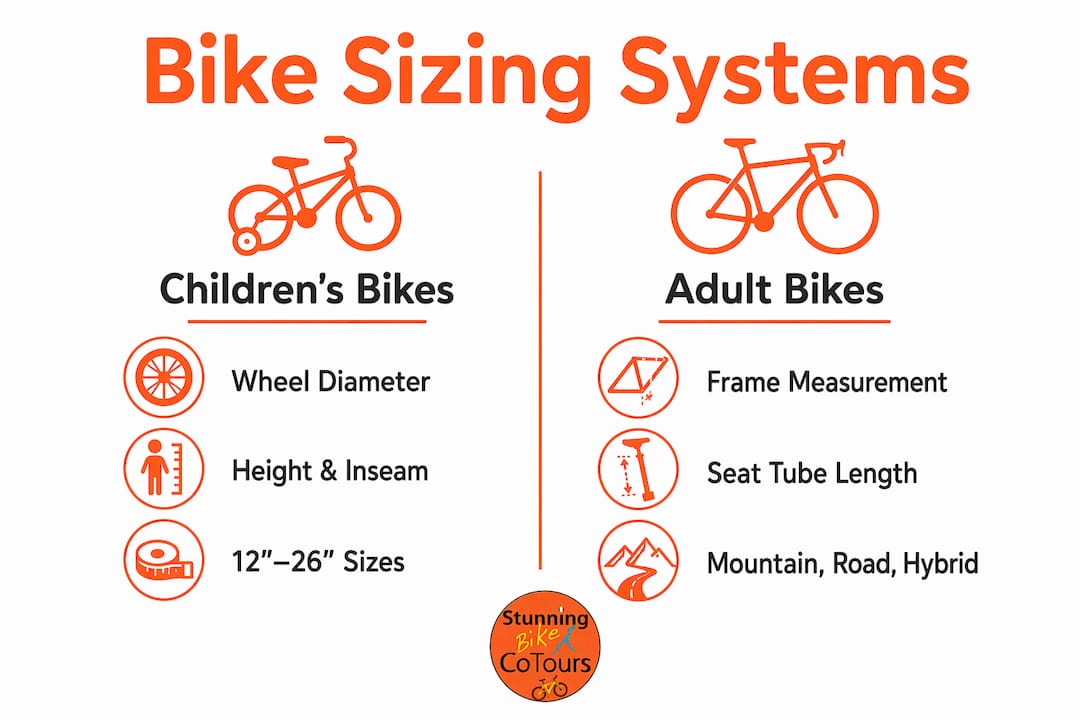
Adult bikes are sized by frame measurements, while children’s bikes are measured by wheel diameter, starting at 12" for toddlers and reaching 26" for older kids approaching adult proportions. The two systems exist because children’s needs change faster than frame geometry can reflect. A child’s leg length and confidence level shift dramatically between ages 4 and 10, so wheel size gives a more practical, universal reference point across brands.
Kids typically transition to adult frame sizing when they reach a height near the upper range for children’s bikes and fit comfortably on an adult frame size in family-friendly NYC hotels. At that point, wheel diameter stops being the right guide and inseam plus height take over.
Quick reference: sizing systems side by side
| Rider | Sizing Method | Key Measurement |
|---|---|---|
| Children | Wheel diameter | Height and inseam |
| Adults | Frame size (seat tube) | Inseam (primary), height |
| Transitional | Either, depending on fit | Inseam + test ride |
Height and inseam are more reliable than age for children’s bike sizing, since kids grow at wildly different rates. A tall 8-year-old may already need a 24" wheel, while a smaller child the same age rides a 20" comfortably. The chart below maps wheel size to the measurements that actually matter.
Children’s bike wheel sizes correspond to approximate height ranges and inseam lengths to help guide fit, but individual growth rates vary widely. Wheel sizes typically increase as children grow, beginning with small sizes suitable for toddlers and progressing to larger sizes for older children ready to transition to adult frames.
Measuring your child’s inseam takes about two minutes. Have them stand straight in shoes, place a hardback book between their legs as high as comfortable, and measure from the top of the book to the floor. That number is your most reliable fit indicator.
Standover clearance matters too. When your child straddles the bike with feet flat on the ground, there should be at least 2 cm of space between them and the top tube. If they’re resting on the tube, the bike is too big. Brake reach is equally worth checking: small hands need to squeeze the levers without straining, or confidence evaporates fast.
Pro Tip: Never buy a kids’ bike “to grow into.” Oversized frames reduce control and slow skill development. A child riding a bike that fits today builds confidence and technique far faster than one wrestling with a frame that’s two sizes ahead.
For families planning to ride together, Stunning Bike Co-Tours’ family biking guide for Como covers practical sizing and safety considerations for children of all ages on real terrain.
Adult frame size is the length of the seat tube, measured from the center of the bottom bracket upward. Road bikes use centimeters; mountain bikes use inches or S/M/L labels; hybrids can use either. Inseam is the more reliable measurement for adults, since two riders of the same height can have very different leg lengths and torso proportions.
Mountain bike frame sizes by inseam
| Inside Leg | Frame Size | Label |
|---|---|---|
| 63 cm | 14 in | XS/S |
| 68 cm | 16 in | S/M |
| 73 cm | 18 in | M/L |
| 78 cm | 20 in | L/XL |
| 83 cm | 21 in | XL/XXL |
Road bikes follow a similar logic but use centimeter frames, and the fit tolerance is tighter because you hold a fixed position for long stretches. A small error that feels fine on a 20-minute spin will announce itself loudly on a two-hour ride. Bike frame geometry varies significantly between brands, so always check the manufacturer’s specific geometry chart rather than assuming one brand’s “medium” matches another’s.
Key sizing considerations beyond frame size:
Bike type directly affects required sizing: mountain bikes are built with lower, sloping top tubes for freedom of movement, while road bikes prioritize aerodynamic efficiency. When you’re between two sizes, measuring your ape index (arm span minus height) helps decide. A positive ape index points toward the larger frame; a negative one toward the smaller.
A sizing chart gets you close. A fit check confirms you’re actually there.
Step-by-step fit verification:
Fit priorities differ by age. For children, the ability to stop confidently, feet flat and brakes reachable, matters more than pedaling efficiency. For adults, the focus shifts toward power transfer, comfort over distance, and posture. Both groups benefit from a test ride before committing to any bike.
Most sizing mistakes follow a predictable pattern. Knowing them in advance saves a frustrating return trip to the shop.
Pro Tip: When a child is right on the border between two wheel sizes, choose the smaller size if they’re a less confident rider and the larger only if they can handle it comfortably. Confidence on a well-fitted bike builds faster than height.
Transitioning from kids’ wheel sizing to adult frame sizing is a milestone worth handling carefully. Around 150 cm in height, most children are ready for an extra-small or small adult frame. At that point, measure inseam, consult the adult size chart, and do a test ride. The shift from wheel-based to frame-based sizing can feel confusing, but the fit principles stay the same: clearance, reach, and saddle height.
At Stunning Bike Co-Tours, proper bike fit isn’t an afterthought. It’s the foundation of every rental and guided tour the team offers. Andrea, who leads bike setup and fitting at Stunning Bike Co-Tours, has worked with families, solo travelers, and cycling enthusiasts across hundreds of Lake Como adventures, and the lesson is consistent: a chart gets you started, but only a physical fit check and a test ride confirm the bike is truly right.
Stunning Bike Co-Tours is located inside a covered hall of shops in Como, a bit set back from the street but impossible to miss thanks to the large, LED-illuminated store window showcasing the bike fleet. A nearby rental operation focuses primarily on motorbikes and scooters. Stunning Bike Co-Tours is a dedicated bicycle specialist, which means every member of the team understands bicycle geometry, fit, and the specific demands of riding around Lake Como’s varied terrain. That distinction matters when you’re choosing who to trust with your family’s bikes.
The team’s approach to fit reflects the importance of safety in bike rentals: well-maintained equipment, correct sizing, and personalized setup before every ride. For city tours along the lakefront, a slightly more upright position works beautifully. For guests heading toward hillier routes or longer distances, the team adjusts saddle height and reach accordingly.
Pro Tip: Tour style changes your ideal fit. A relaxed lakefront cruise calls for a higher handlebar position and a more upright posture. A longer off-road adventure benefits from a lower, more forward position that distributes weight efficiently. Tell your rental team where you’re going before they set up your bike.
With over 4,000 happy customers and a strong run of five-star reviews on TripAdvisor, Stunning Bike Co-Tours has built its reputation on exactly this kind of attentive, personalized service. Sizing charts are tools. The people who know how to apply them, and who take the time to do it properly, are what make the difference between a good ride and a great one.
Ready to experience Lake Como on a perfectly fitted bike? Stunning Bike Co-Tours offers top-rated bike rentals with personalized setup for every rider, from young children to adults. You can also rent a bike or book a guided tour directly, with expert staff ready to match you to the right bike before you roll out.
Children’s bikes are sized by wheel diameter (12"–26") while adult bikes use frame measurements, and inseam is the most reliable measurement for both groups.
| Point | Details |
|---|---|
| Two distinct sizing systems | Kids use wheel diameter; adults use seat tube length or S/M/L labels. |
| Inseam beats height alone | Inseam directly reflects how you interact with the frame, making it more reliable than height for both children and adults. |
| Transition at ~150 cm | Children around 150 cm tall are ready to move from wheel-based to adult frame sizing. |
| Never size up for growth | Oversized bikes reduce control and slow skill development, especially for children learning to ride. |
| Test rides confirm the chart | Sizing charts are starting points; a physical fit check and test ride are what confirm the bike truly fits. |
Children’s bikes are sized by wheel diameter (12"–26"), while adult bikes are sized by frame measurements, typically seat tube length in centimeters or labeled sizes like S, M, and L.
Measure both height and inseam. Inseam is the more accurate indicator because it directly reflects how the rider interacts with the frame, especially for children and adults between two sizes.
Most children are ready for adult frame sizing at around 150 cm (approximately 4’11") in height. At that point, use an adult size chart and prioritize inseam measurement over age or wheel size.
Use the standover test (at least 2 cm clearance for kids, 1–4 inches for adults depending on bike type), the heel-on-pedal saddle height check, and confirm you can reach the handlebars with a slight elbow bend, not a full stretch.
Yes. Mountain bikes require more standover clearance and use inseam as the primary sizing reference, while road bikes use centimeter frames and demand tighter fit tolerances. The same rider may need different sizes across bike categories due to geometry differences.